Service Mesh (Envoy / Istio) Sidecar CPU Throttling Freezing Ingress RPCs
Kubernetes cluster running Istio service mesh with Envoy sidecar proxy containers.
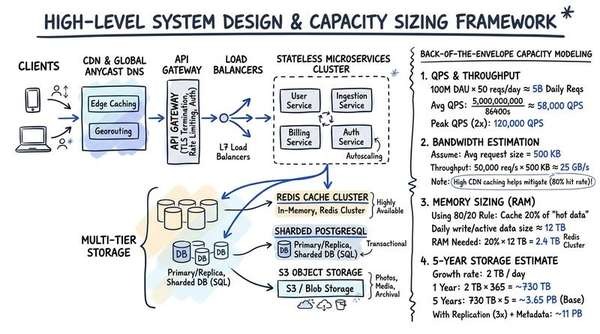
Kubernetes cluster running Istio service mesh with Envoy sidecar proxy containers. Failure cascade dynamic: 100k QPS → TTL Expiration → Cache Miss Herd → Origin Slam → 💥 DB Meltdown.
Core Functional Requirements
- ✓Operational Invariant: "Avoid restrictive CFS CPU limits on service mesh proxies to prevent kernel-enforced latency throttling spikes."
- ✓Production Hardening: Remove strict CFS CPU limits on latency-critical network proxies (or set limits with 5x headroom), configure hardware-accelerated crypto, and monitor container_cpu_cfs_throttled_se
- ✓Prevent cascading failure by isolating downstream degradation at the ingress boundary.
Remove strict CFS CPU limits on latency-critical network proxies (or set limits with 5x headroom), configure hardware-accelerated crypto, and monitor container_cpu_cfs_throttled_seconds_total. Invariant: "Avoid restrictive CFS CPU limits on service mesh proxies to prevent kernel-enforced latency throttling spikes."
Hardened Implementation Steps
- 1Ingress Boundary Defense: Remove strict CFS CPU limits on latency-critical network proxies (or set limits with 5x headroom), configure hardware-accelerated crypto, and monitor
- 2Failure Containment: Eliminate unconstrained buffering and propagate physical backpressure.
- 3Invariant Enforcement: Avoid restrictive CFS CPU limits on service mesh proxies to prevent kernel-enforced latency throttling spikes.
Production Code Contrast & Implementation
// HARDENED: Non-blocking reactive token bucket rate limiter
Mono filter(ServerWebExchange exchange, GatewayFilterChain chain) {
    return tokenBucketLimiter.tryConsume(clientIp)
        .flatMap(allowed -> allowed ?
            chain.filter(exchange).timeout(Duration.ofMillis(300)) :
            exchange.getResponse().setStatusCode(HttpStatus.TOO_MANY_REQUESTS).setComplete()
        );
}Architectural comparison of naive unconstrained allocations versus production-hardened mechanical sympathy.
Architectural Decisions & Trade-Offs
- ⚖Ingress Admission: Naive unconstrained buffering causes queue bloat and GC exhaustion. Mitigation: Bounded ingress gate with fast non-blocking shedding.
- ⚖Resource Strategy: Static capacity allocations collapse under brownouts. Mitigation: Dynamic adaptive limits scaling to real-time physical bounds.
- ⚖Outage Impact: Cascading lock convoys and memory saturation. Mitigation: Isolated failure domains keep P99 latency flat and protected.
Alternatives Evaluated
- →Naive Approach: Envoy sidecar CPU limit is set conservatively to 500m. A surge in mutual TLS (mTLS) traffic drives Envoy CPU to 500m. The Linux CFS quota throttles En
- →Production-Hardened Pattern: Remove strict CFS CPU limits on latency-critical network proxies (or set limits with 5x headroom), configure hardware-accelerated crypto, and monitor
Operational Hazards & Mitigations
- ⚠Cascading Failure: Envoy sidecar CPU limit is set conservatively to 500m. A surge in mutual TLS (mTLS) traffic drives Envoy CPU to 500m. The Linux CFS quota throttles Envoy, spiking proxy latency from 0.5ms to 850ms on all microservice communications.
- ⚠Breakdown Chain: 100k QPS → TTL Expiration → Cache Miss Herd → Origin Slam → 💥 DB Meltdown
- ⚠Shedding Failure: Without fast rejection at the boundary, queued dead work triggers multi-second GC pauses, CPU thrashing, and cascading 504 Gateway Timeouts.
How does the system enforce physical resource boundaries under sudden downstream latency brownouts?
Interactive Assessment & Knowledge Check
Test your understanding of the architecture decisions, data patterns, and trade-offs used in Service Mesh (Envoy / Istio) Sidecar CPU Throttling Freezing Ingress RPCs.
Circuit Breaker State Machine Transitions
In a Circuit Breaker state machine (Closed, Open, Half-Open), what triggers the transition from OPEN back to HALF-OPEN?