HTTP Keep-Alive Desynchronization (Reverse Proxy vs Backend Socket Timeout)
Nginx reverse proxy communicating with a Spring Boot backend over persistent HTTP keep-alive connections.
Nginx reverse proxy communicating with a Spring Boot backend over persistent HTTP keep-alive connections. Failure cascade dynamic: Scale Surge → Unbounded Contention → Physical Bottleneck → 💥 Outage Cascade.
Core Functional Requirements
- ✓Operational Invariant: "Upstream proxy keep-alive timeouts must be strictly shorter than backend server idle timeouts to prevent race-condition connection resets."
- ✓Production Hardening: Always configure downstream backend servers with a LONGER keep-alive timeout than upstream proxies (e.g. Nginx keepalive_timeout 60s, backend keep-alive timeout 65s), and enable pr
- ✓Prevent cascading failure by isolating downstream degradation at the ingress boundary.
Scale & Latency Constraints
- —Incident Scenario Baseline: Nginx reverse proxy communicating with a Spring Boot backend over persistent HTTP keep-alive connections.
- —Failure Cascade Path: Scale Surge → Unbounded Contention → Physical Bottleneck → 💥 Outage Cascade
- —Sub-millisecond rejection / shed latency for overloaded requests
Always configure downstream backend servers with a LONGER keep-alive timeout than upstream proxies (e.g. Nginx keepalive_timeout 60s, backend keep-alive timeout 65s), and enable proxy retry on connection reset ('proxy_next_upstream error timeout invalid_header'). Invariant: "Upstream proxy keep-alive timeouts must be strictly shorter than backend server idle timeouts to prevent race-condition connection resets."
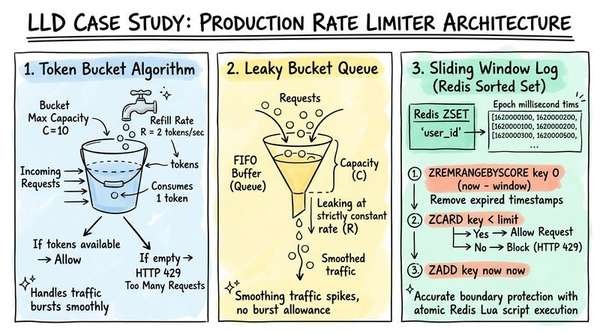
Hardened Implementation Steps
- 1Ingress Boundary Defense: Always configure downstream backend servers with a LONGER keep-alive timeout than upstream proxies (e.g. Nginx keepalive_timeout 60s, backend keep-ali
- 2Failure Containment: Eliminate unconstrained buffering and propagate physical backpressure.
- 3Invariant Enforcement: Upstream proxy keep-alive timeouts must be strictly shorter than backend server idle timeouts to prevent race-condition connection resets.
Production Code Contrast & Implementation
// HARDENED: Non-blocking reactive token bucket rate limiter
Mono filter(ServerWebExchange exchange, GatewayFilterChain chain) {
    return tokenBucketLimiter.tryConsume(clientIp)
        .flatMap(allowed -> allowed ?
            chain.filter(exchange).timeout(Duration.ofMillis(300)) :
            exchange.getResponse().setStatusCode(HttpStatus.TOO_MANY_REQUESTS).setComplete()
        );
}Architectural comparison of naive unconstrained allocations versus production-hardened mechanical sympathy.
Architectural Decisions & Trade-Offs
- ⚖Ingress Admission: Naive unconstrained buffering causes queue bloat and GC exhaustion. Mitigation: Bounded ingress gate with fast non-blocking shedding.
- ⚖Resource Strategy: Static capacity allocations collapse under brownouts. Mitigation: Dynamic adaptive limits scaling to real-time physical bounds.
- ⚖Outage Impact: Cascading lock convoys and memory saturation. Mitigation: Isolated failure domains keep P99 latency flat and protected.
Alternatives Evaluated
- →Naive Approach: Spring Boot has 'server .tomcat.keep-alive-timeout = 20000ms', while Nginx has 'keepalive_timeout = 65s'. When a connection has been idle for 20s, Spr
- →Production-Hardened Pattern: Always configure downstream backend servers with a LONGER keep-alive timeout than upstream proxies (e.g. Nginx keepalive_timeout 60s, backend keep-ali
Operational Hazards & Mitigations
- ⚠Cascading Failure: Spring Boot has 'server .tomcat.keep-alive-timeout = 20000ms', while Nginx has 'keepalive_timeout = 65s'. When a connection has been idle for 20s, Spring Boot initiates TCP FIN right as Nginx dispatches an incoming request. Nginx receives TCP RST and returns 502 Bad Gateway.
- ⚠Breakdown Chain: Scale Surge → Unbounded Contention → Physical Bottleneck → 💥 Outage Cascade
- ⚠Shedding Failure: Without fast rejection at the boundary, queued dead work triggers multi-second GC pauses, CPU thrashing, and cascading 504 Gateway Timeouts.
How does the system enforce physical resource boundaries under sudden downstream latency brownouts?
Extension Implementation Steps
- 1Track real-time latency gradients and inflight concurrency.
- 2Reject excess traffic at the ingress boundary within <0.1ms.
- 3Monitor P99 latency and verify autonomous recovery when downstream pressure subsides.
Follow-Up Trade-Offs
- ⚖Architectural Invariant: "Upstream proxy keep-alive timeouts must be strictly shorter than backend server idle timeouts to prevent race-condition connection resets."
- ⚖Physical Resource Boundary: Dynamic admission control ensures worker threads never buffer dead requests during downstream brownouts.
Interactive Assessment & Knowledge Check
Test your understanding of the architecture decisions, data patterns, and trade-offs used in HTTP Keep-Alive Desynchronization (Reverse Proxy vs Backend Socket Timeout).
Circuit Breaker State Machine Transitions
In a Circuit Breaker state machine (Closed, Open, Half-Open), what triggers the transition from OPEN back to HALF-OPEN?